
Storm Damage in Daleville, IN
Daleville Water Restoration dries storm soaked ceilings and walls in Daleville and keeps the readings in a file you own.
Daleville Water Restoration is the Daleville call for Storm Damage: emergency crews around the clock, moisture readings instead of guesswork, and insurance files built properly. Call (812) 515-1567.
- Service: Storm Damage for Daleville homeowners
- Service area: Daleville, IN and surrounding areas
- Response time: 24/7 answering with priority emergency dispatch across Daleville
- Licensed and insured (License #RC21100059)
- Serving Daleville, IN since 2018
Storm Damage Cleanup in Daleville
We'll dry out your home in Daleville after storm water gets in through the roof or the basement.
Storms Here
Severe thunderstorms come through in spring and summer, and the occasional tornado comes with them. Storms here can also bring large hail and damaging wind. If your insurance company asks for a storm date, NWS Indianapolis keeps a list of past events.
Where Storm Water Ends Up
Homes near the White River can see rising water after heavy rain. With full basements common here, a big storm can bring water in from below as well as through the roof. That makes it a basement flooding job too.
After a storm we can be anywhere in Daleville, from the Bronco Drive Corridor to the roads around Canoe Country and Bird's Smokehouse BBQ. We also handle storm damage in Yorktown, Chesterfield, Anderson and Muncie.
Expert Storm Damage for Daleville Homeowners
Water coming out of a ceiling light or a fan canopy means it's pooling on top of the drywall and has already found the electrical box. Shut off that circuit at the breaker before anything else. Daleville Water Restoration takes storm water calls in Daleville, IN around the clock and dispatches a crew within 2 hours to pull the water out, open what has to come open, and dry the cavity that's been holding it.
Aaron Christy founded the company behind Daleville Water Restoration in 2018. On a storm job in Daleville, the crew covers the opening, reads the materials and removes only what won't dry, then logs readings until the numbers say the house is dry. You get those readings and the photos in a file you keep, so the work is easy to follow later.
The first stage on site is a walk through with you. The technician asks where you first saw water and which rooms were affected, then photographs each one before anything moves. That walk also settles where the equipment will stage and which rooms need the most attention, so the work in your Daleville home starts with a plan.
Hidden damage behind a wall often shows up only after it's opened. When that happens, the crew photographs the cavity and takes readings, and you get the new scope in writing before the work changes. Many insurance companies review added damage as a supplement to the original claim, so the photos from your Daleville home matter.
Several days of fans and a dehumidifier haven't dried the room? Call Daleville Water Restoration, and the meters will show what's still wet inside the walls and floors of your Daleville home, along with whether more drying will help or something has to come out.
Signs You Need Storm Damage Restoration
If you notice any of these in your Daleville home, schedule a free inspection before the issue worsens.
Water seeping in at the floor and wall joint during heavy rain
Ceiling stains in a hallway or closet far from any bathroom
Dark water line on basement drywall several inches above the floor
Plaster ceilings with fresh hairline cracks and a dull, damp look
Puddles along an exterior wall or standing water in a basement window well after heavy rain
Stored boxes in a basement corner with damp bottom edges or water lines
A wet soffit or ceiling corner on a covered porch after wind pushed rain up under the eave
Mud film on a basement floor once the water has drained away
White chalky residue on a basement foundation wall where water has been moving through it
A fresh stain appearing where an upstairs wall meets the ceiling during a winter thaw
How Daleville Water Restoration Handles Storm Damage
We follow these steps in order on every Daleville job.
Power and Safety Check
The crew looks for water near outlets and light fixtures and keeps affected circuits off. Sagging ceilings and slick floors get marked before anyone starts work, and wet electrical gear gets flagged for an electrician.
Sump and Drain Check
The crew looks at the sump basin and the floor drains to see whether water is still entering or backing up. Anything that needs a plumber or an electrician gets noted, so the basement isn't refilling while the drying runs.
Wet Insulation Removal
Soaked batts and matted blown in get bagged out of the attic and the ceiling cavity, with type, depth and square footage recorded for the rebuild and for the claim. Wet insulation holds water against the ceiling board and loses its insulating value while it's wet.
Drying Equipment Setup
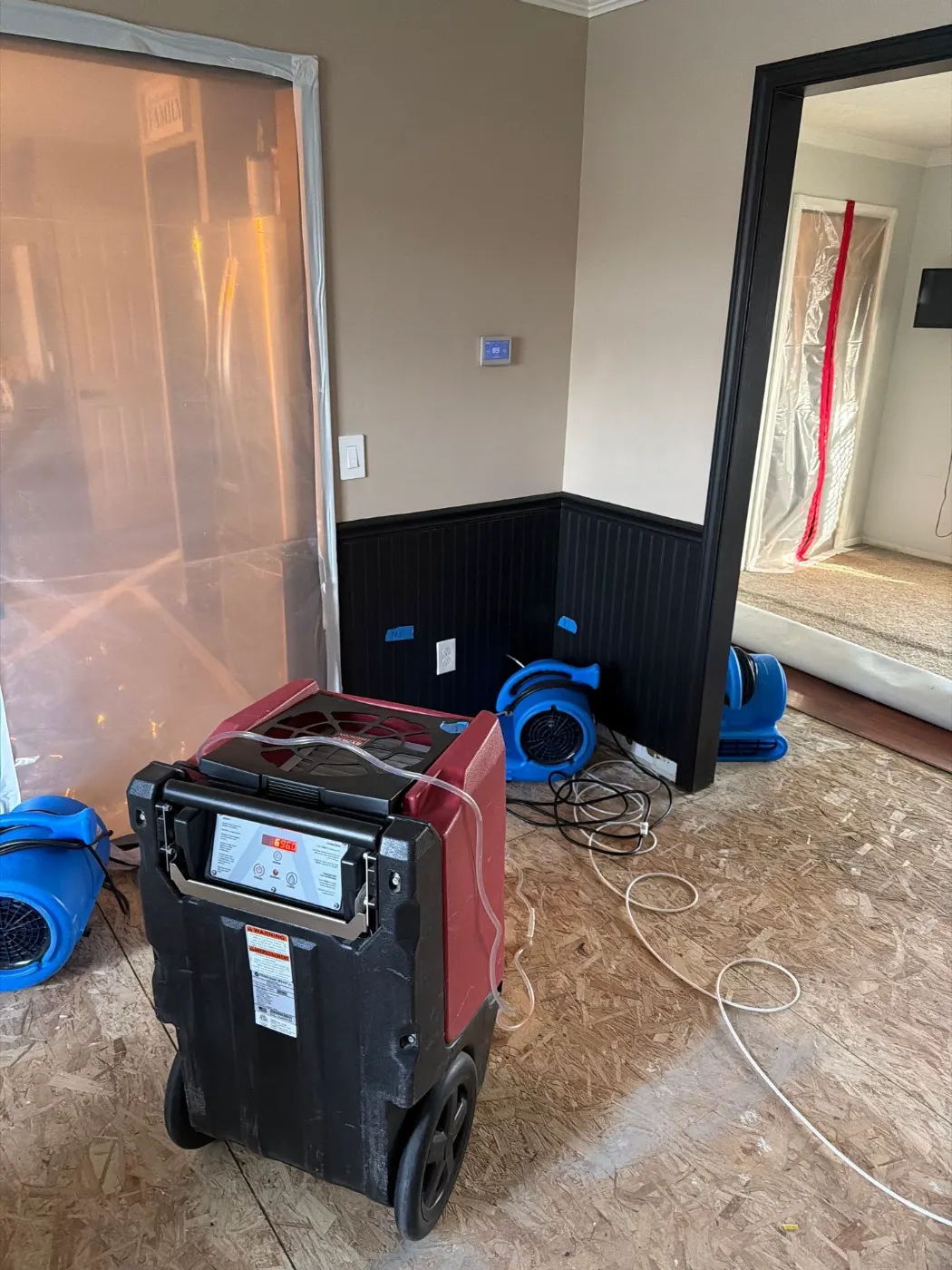
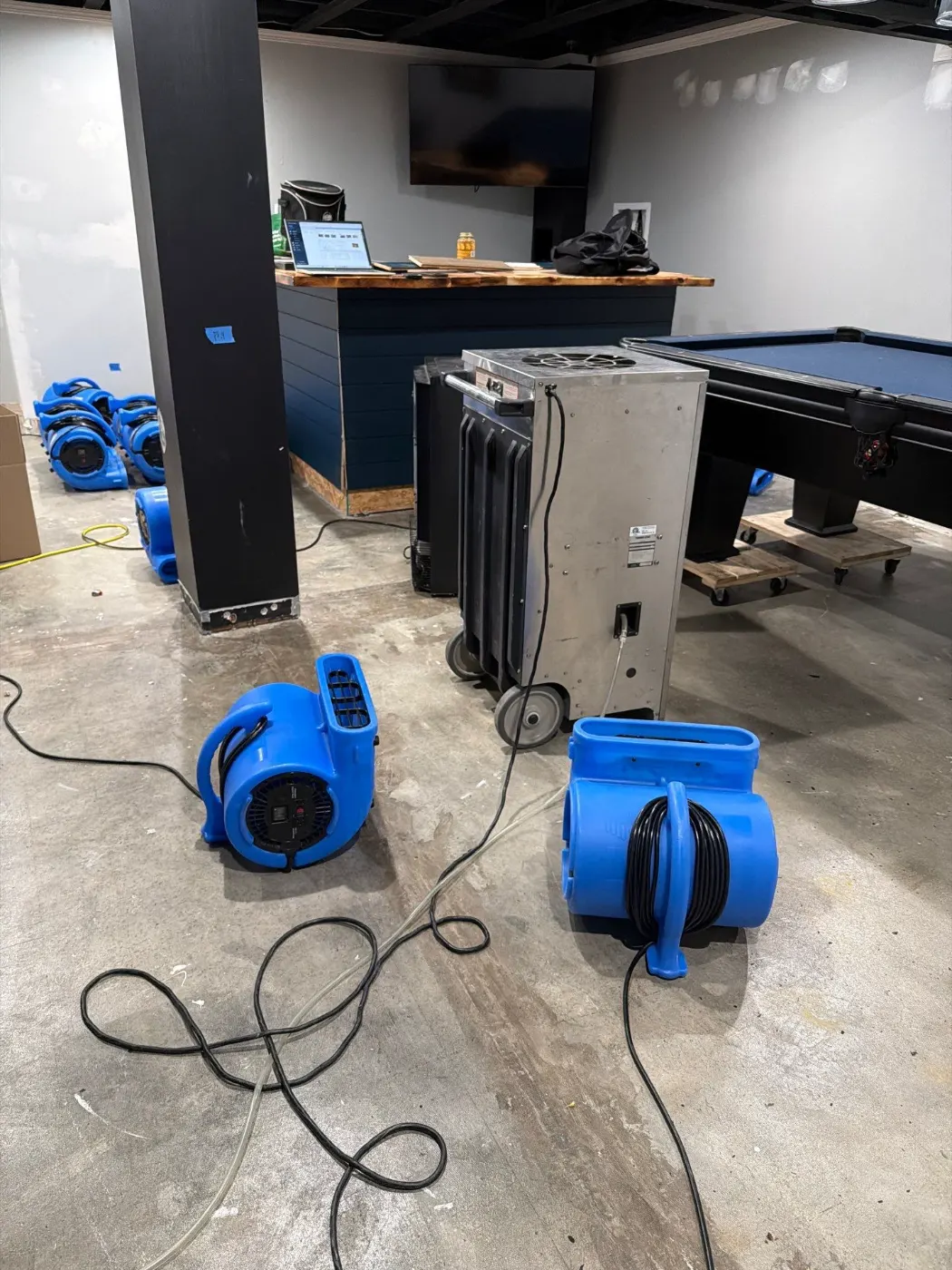
Air movers go where the mapping shows wet surfaces, and dehumidifiers get sized to the volume of the space being dried. Closed doors and poly sheeting seal off the drying area so the equipment works on the wet rooms only.
Attic and Cavity Drying
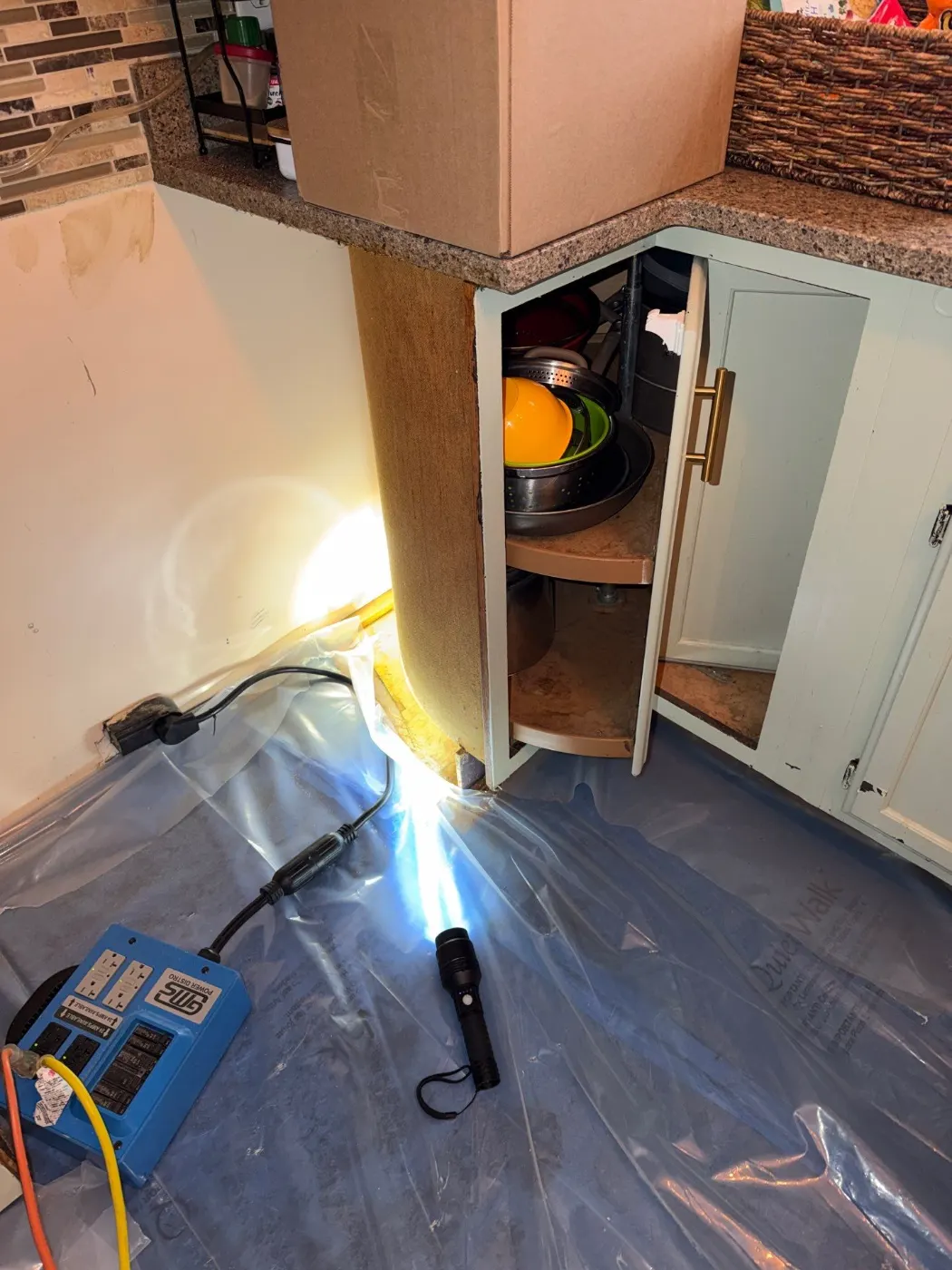
Air movers aim at wet surfaces, dehumidification is sized to the containment volume, and negative air cavity drying runs through small ports where a ceiling or wall doesn't have to come down to dry. Humidity gets tracked inside and outside the drying area.
Storm Damage in Daleville
Photographs from real storm damage jobs completed by our crew in Daleville and surrounding areas.
Storm Damage FAQ
Questions Daleville homeowners ask us about storm damage restoration.
Guidance and Standards for Storm Damage
- The National Weather Service office in Indianapolis posts summaries of recent central Indiana storm and flood events. NWS Indianapolis Event Summaries
- The Indiana Department of Insurance advises against permanent repairs before your insurance company inspects the damage. Check your own policy for what it covers. Indiana Department of Insurance: Insurance Claim Tips
Daleville Neighborhoods We Serve
We take storm damage calls in every part of Daleville. Pick your neighborhood for local details.
Other Restoration Services in Daleville
Daleville Water Restoration handles the full scope of restoration work. Explore our other services below.
Water Damage Restoration in Daleville
24/7 emergency response. IICRC certified water restoration from extraction to full dry out.
Learn more →Basement Flooding in Daleville
Basement water emergencies handled fast. Extraction, drying, mold prevention.
Learn more →Sewage Cleanup in Daleville
Category 3 biohazard cleanup. Full containment, decontamination, structural restoration.
Learn more →Request Storm Damage Restoration
Reach Us Directly
Our team is available 24/7 for emergencies and ready to schedule inspections during business hours.
Need Immediate Help?
For active water or mold emergencies, call us directly. We are available 24/7.