Is an overflowing toilet really considered Category 3 water?
Yes, in almost every case. The IICRC S500 standard classifies any water that has contacted sewage, fecal matter, or the trap and drain side of a toilet as Category 3. That includes clear-looking water from a clogged bowl that overflowed before anything visible came up. The contamination is in the biofilm coating the inside of the trap, and the second that water crosses the rim, it picks up E. coli, hepatitis A, rotavirus, and giardia. A clean supply line leak from the tank itself can start as Category 1, but once it sits more than 24 hours or touches flooring assemblies, it degrades to Category 2 or 3. When in doubt, treat it as black water. That is what every certified restorer in Daleville will do.
What should you do in the first 15 minutes?
Shut the water off at the supply valve behind the toilet, turning the oval handle clockwise until it stops. If the valve is corroded or spinning freely, close the main shutoff for the house. Keep pets and kids out of the room, including the floor below if water is dripping through. Open a window for ventilation but do not run the HVAC, because that pulls contaminated aerosols into your ductwork and spreads pathogens through every register in the house. Put on rubber gloves and rubber boots if you have them. Do not start mopping with household towels you plan to reuse. Take photos of everything, wide shots and close-ups, before any cleanup begins. Your insurance adjuster will ask for them. If the overflow happened overnight or while you were away, also check the ceiling of any room directly below the bathroom for staining, sagging, or active drips, because water travels along joists and can surface several feet from the original source.
What materials can be saved and what has to go?
The IICRC rule of thumb on Category 3 water is straightforward. Non-porous materials like tile, sealed concrete, glass, and stainless steel can almost always be cleaned, disinfected, and kept. Semi-porous materials like finished hardwood, engineered flooring, and solid wood trim sit in a gray zone. We can sometimes save them with aggressive extraction and structural drying if we get there within 24 hours, but warped boards or cupped seams usually mean replacement. Porous materials are the tough call. Carpet pad, insulation, particleboard, MDF cabinetry, drywall below the waterline, and upholstered furniture that absorbed sewage water all get cut out and bagged. Trying to save them is a false economy because the pathogens embed in fibers that no surface disinfectant can fully reach. Solid wood furniture, leather, and metal fixtures usually survive a thorough cleaning. We document every removed material with photos and measurements so your insurance claim reflects the actual loss.
How much does toilet overflow cleanup cost in Daleville?
For a contained bathroom overflow with no migration into adjacent rooms, most Daleville jobs land between $1,500 and $3,500. That covers extraction, sanitization, drying, and disposal. If the water reached a hallway, bedroom carpet, or dropped through the ceiling to a finished room below, expect $4,000 to $9,000 because you are now drying multiple assemblies and likely cutting drywall on the lower level. Multi-floor sewage events involving cabinetry, hardwood, or HVAC contamination can run $12,000 to $25,000. Homeowners insurance typically covers sudden and accidental overflows under your dwelling and personal property coverage, though sewer backup from the municipal line requires a separate endorsement that costs about $40 to $80 a year. We document everything to claim standards and bill your carrier directly when possible.
What does professional Category 3 cleanup actually involve?
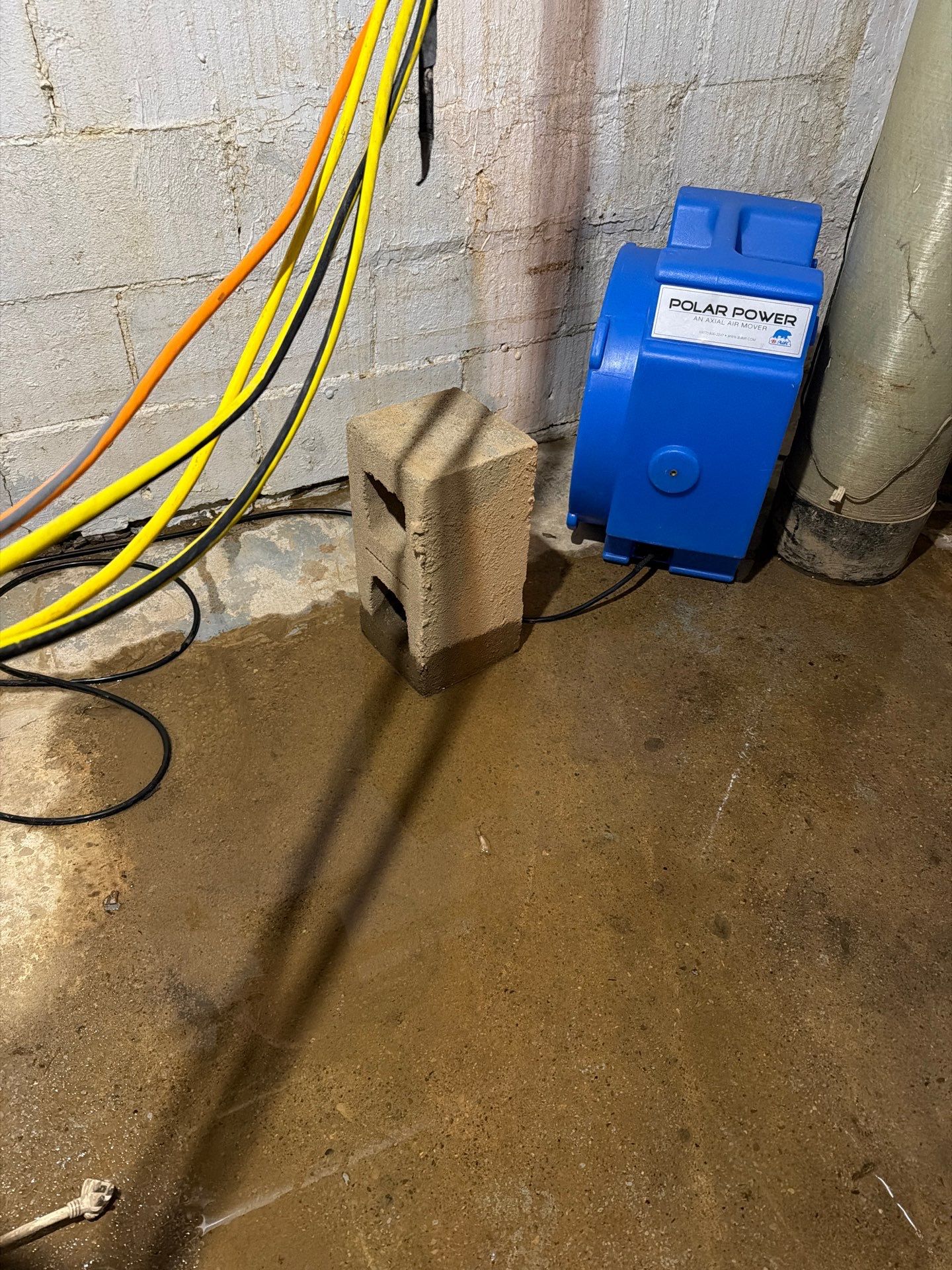
When our Daleville Water Restoration crew arrives at a Daleville home, the first 30 minutes are containment and assessment. We set up plastic barriers with zipper doors, run negative air machines with HEPA filtration, and meter the moisture in every affected material using penetrating and non-penetrating probes. Then we extract standing water with truck-mounted equipment, remove unsalvageable porous materials including saturated drywall, insulation, baseboards, and carpet pad, and apply an EPA-registered antimicrobial to all affected surfaces. Drying follows with commercial air movers and LGR dehumidifiers sized to the cubic footage of the space. We monitor daily for three to five days until moisture readings match the unaffected dry standard. You can read more about the full process on our sewage cleanup service page, and our blog on safe sewage backup removal walks through the technical side in more depth.
Will my insurance cover this?
Usually yes, if the overflow was sudden and accidental. A clogged toilet that backed up because a child flushed a toy is covered under most standard HO-3 policies. A sewer line backup from outside the home is only covered if you carry the water backup endorsement. Chronic leaks the carrier deems long-term seepage are excluded. The faster you document and call a certified restorer, the cleaner the claim. Adjusters look for IICRC documentation, moisture logs, photos, and a detailed scope. We produce all of that as standard work product, which speeds approvals and reduces the chance of a denied claim. Keep a copy of the original plumber invoice if a separate trade fixed the underlying clog, since carriers want to see that the cause was addressed before paying out the restoration scope.
Can you clean a toilet overflow yourself?
Sometimes. If the spill is under 10 square feet, contained to a tile or vinyl floor with no porous materials touched, and you have proper PPE including an N95 respirator, nitrile gloves, and eye protection, you can manage it. Remove solids with a disposable scoop, soak up liquid with absorbent pads, then clean with a hospital-grade disinfectant labeled for norovirus and rated for a 10-minute dwell time. Bag everything in contractor-grade trash bags, double-bagged, and dispose of it through your regular trash. Wash exposed skin immediately with soap and hot water for 20 seconds. If the water touched carpet, hardwood, drywall, cabinetry, or migrated under the toilet flange, stop and call a professional. Those materials need extraction, antimicrobial treatment, and controlled drying you cannot replicate with retail tools. Also stop if anyone in the household is immunocompromised, pregnant, under two years old, or over 65, since the pathogen exposure risk for those groups is high enough that a DIY approach is not worth the gamble.
What about mold after a sewage event?
Mold can start growing on wet cellulose within 24 to 48 hours, and sewage water accelerates it by feeding microbes a buffet of organic material. Proper Category 3 drying prevents this, but only if affected porous materials are removed rather than dried in place. If you are dealing with a delayed discovery, say a guest bathroom that overflowed while you were on vacation, assume mold is present and treat accordingly. Our water damage restoration team handles both the sewage extraction and any secondary mold remediation under one scope, which keeps the timeline tight and the paperwork simple.