The 7-Step Flooded Basement Cleanup Process
Here is the order professional crews actually work in. Skipping steps costs you more later.
- Safety check. Power shut off at the panel, gas valve verified, structural walls inspected.
- Water extraction. Truck-mount or portable units pull standing water in the first few hours.
- Content triage. Salvageable items moved out, unsalvageable porous items documented and discarded.
- Demolition (if needed). Wet drywall cut to the flood line, wet carpet pad removed, baseboards pulled.
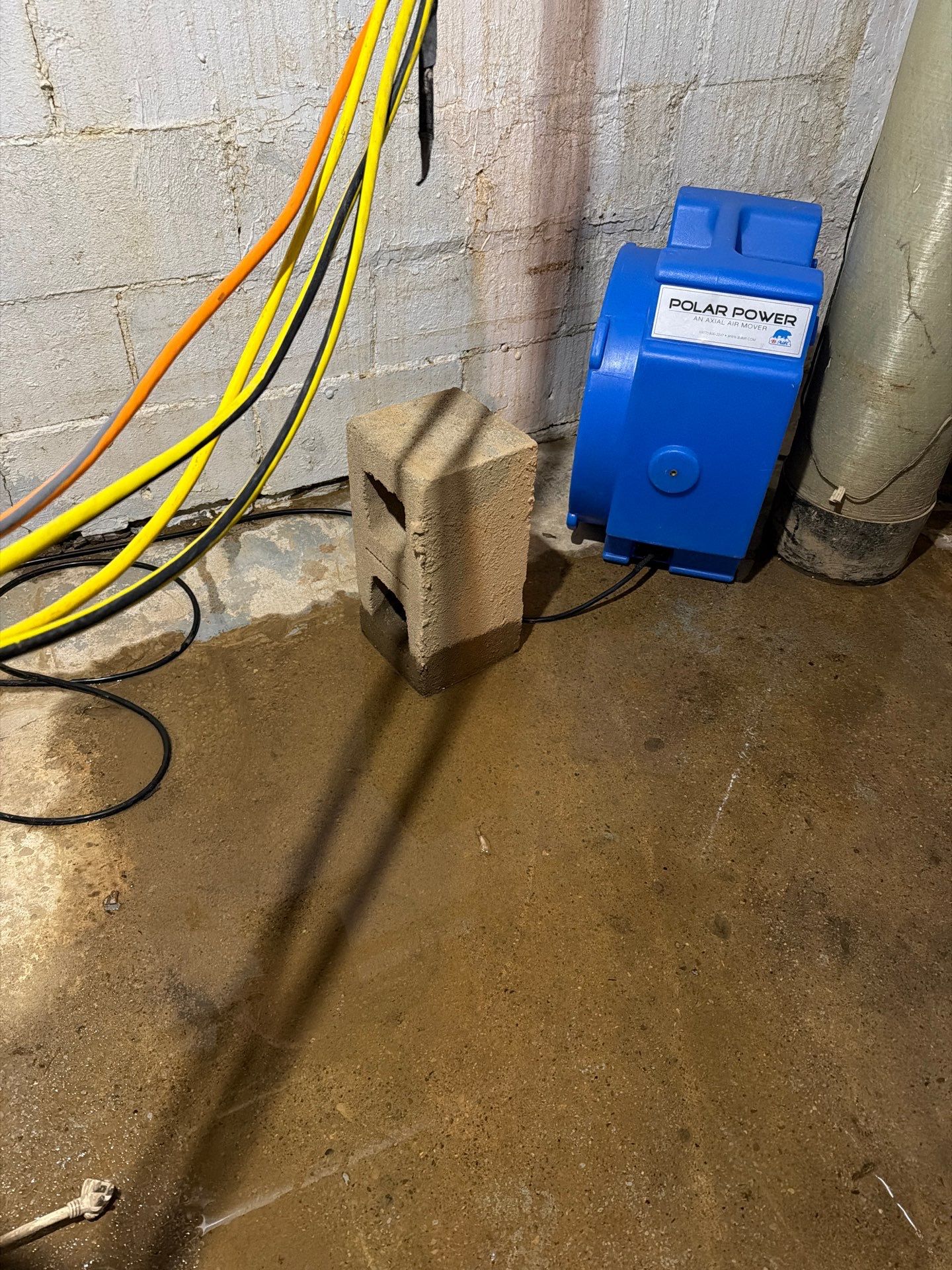
- Drying setup. Air movers and commercial dehumidifiers placed by moisture mapping, not guesswork.
- Daily monitoring. Moisture readings logged every 24 hours until materials hit dry standard.
- Antimicrobial and reconstruction. Treatment applied, then drywall, paint, flooring rebuilt.
What Drives the Price (And What Does Not)
Cost is not random. These five factors move the number up or down in Daleville:
- Water category. Clean supply line is cheapest. Gray water from a washer is mid-range. Black water from sewage or groundwater is the most expensive.
- Square footage affected. A 200 sq ft utility room is not a 1,400 sq ft finished basement.
- Saturation depth. An inch of water across the slab dries faster than 18 inches that soaked drywall and insulation.
- Time elapsed. Water sitting 48+ hours usually means mold protocols and higher labor.
- Materials involved. Hardwood and engineered flooring cost more to dry or replace than vinyl plank or tile.
What does not move the price much: the brand of your dehumidifier, whether the crew shows up in a wrapped van versus a plain one, or which day of the week the loss happened. Reputable companies charge by Xactimate line items, the same database insurance carriers use.
For a detailed line-item view, our complete water damage restoration cost breakdown walks through equipment day rates, demo charges, and reconstruction by material.
Realistic Cost Ranges in Daleville
These are working ranges based on Central Indiana jobs. Your number depends on the factors above.
- Minor clean water, under 300 sq ft: $1,200 to $2,800
- Moderate clean water, 300 to 800 sq ft: $2,800 to $5,500
- Large clean water event, 800+ sq ft: $5,500 to $10,000
- Gray water (washer, dishwasher backup): add 20 to 40 percent
- Black water (sewage, storm surge): $7,000 to $20,000+ with full demo
- Mold remediation if discovered: $1,500 to $6,000 additional
- Reconstruction (drywall, paint, flooring): $3,000 to $15,000 depending on finish level
Insurance: What You Need to Know
Most homeowner policies cover sudden and accidental water damage. Groundwater flooding usually requires a separate flood policy.
- Covered: burst pipes, supply line failures, appliance overflows, ice dams, roof leaks from a covered peril.
- Often excluded: seepage, sump pump failure (unless you have the endorsement), and surface flooding.
- Documentation that helps your claim: moisture readings, photos, equipment logs, itemized scope of work.
Daleville Water Restoration provides full documentation packages every adjuster expects. If you want a deeper walk-through of timing and triage, our guide on basement flooding steps and professional cleanup covers the first 24 hours in detail. For sewage scenarios specifically, see our sewage cleanup service page for what makes those jobs different.
Red Flags When Hiring a Restoration Company
Not every company knocking on doors after a Daleville storm is legitimate.
- No physical address or local crew.
- Pressure to sign an assignment of benefits before any inspection.
- No IICRC certification on staff.
- Verbal estimates with no written scope.
- Unwilling to share insurance, license, or BBB record.
A real local company will hand you paperwork, walk you through the scope, and tell you when something is not worth restoring.
What Cannot Be Saved (Be Realistic)
Some materials are not worth drying, and a good contractor will say so up front.
- Wet carpet pad (cheap to replace, holds contamination).
- Particleboard furniture once it swells.
- Drywall soaked above 4 inches from the floor for more than 48 hours.
- Insulation that has been wet, especially fiberglass batts and cellulose.
- Cardboard boxes and paper goods in any category of water.
- Mattresses and upholstered furniture touched by gray or black water.
Items worth fighting for include solid wood furniture, photographs (freeze them until restoration), and most hard goods that can be cleaned and sanitized. Daleville Water Restoration crews in Daleville sort contents on site and document every decision for your claim file.
Preventing the Next Basement Flood
Once you have dried out, the goal is making sure you never do it again. A handful of low-cost upgrades dramatically reduce your odds.
- Battery backup sump pump. Power often fails during the same storms that overwhelm your primary pump.
- Water alarm or smart leak sensor. A $25 sensor near the water heater or sump pit can save five figures.
- Backwater valve. Prevents municipal sewer backup from pushing into your basement during heavy rain.
- Gutter and downspout extensions. Discharge water at least 6 feet from the foundation.
- Grading check. Soil should slope away from the house. Settled spots near the foundation are a top cause of seepage.
- Sump pump service. Test annually. Replace every 7 to 10 years before failure, not after.
How Professional Drying Actually Works
Drying a basement is not about pointing fans at puddles. It is a controlled science with measurable endpoints.
- Moisture mapping. Penetrating and non-penetrating meters identify wet materials, including behind drywall.
- Air movers. High-velocity fans accelerate evaporation off surfaces. Typically one per 10 to 16 linear feet of wet wall.
- LGR dehumidifiers. Low Grain Refrigerant units pull 15 to 30 gallons of water from the air per day each.
- Containment. Plastic sheeting concentrates the drying environment and protects the rest of your home.
- Daily readings. Crews return every 24 hours to log moisture content until materials match dry baseline.
- IICRC S500 standard. The industry benchmark for water damage. Reputable companies follow it. Ask if yours does.
Typical drying time is 3 to 5 days for a moderate event. Concrete and masonry can take longer. Removing wet materials early shortens the timeline and reduces the dehumidifier rental days, which is where a lot of the bill stacks up.
The First 60 Minutes: Your Action List
Before any crew arrives, do these things if it is safe.
- Kill power to the basement at the main panel.
- Identify the source. Stop the flow at the valve if it is a pipe or appliance.
- Move dry items off the floor and away from walls upstairs.
- Photograph everything. Wide shots, then close-ups of damaged contents.
- Pull up area rugs, lift furniture skirts off wet carpet.
- Call your insurance carrier and start the claim number.
- Call a restoration company. Daleville Water Restoration answers 24/7 and dispatches across Daleville.
If you are unsure whether to enter the basement at all, do not. Standing water plus live outlets is a real electrocution risk, and you cannot see what is under the surface. Submerged nails, broken glass, and floating chemical containers are common hazards we find on arrival.